Best Open-Source Secrets Manager Alternative to Doppler
Compare Dopbase and Doppler on open source, self-hosting, pricing, and workflow. Learn when each secrets manager fits your team.
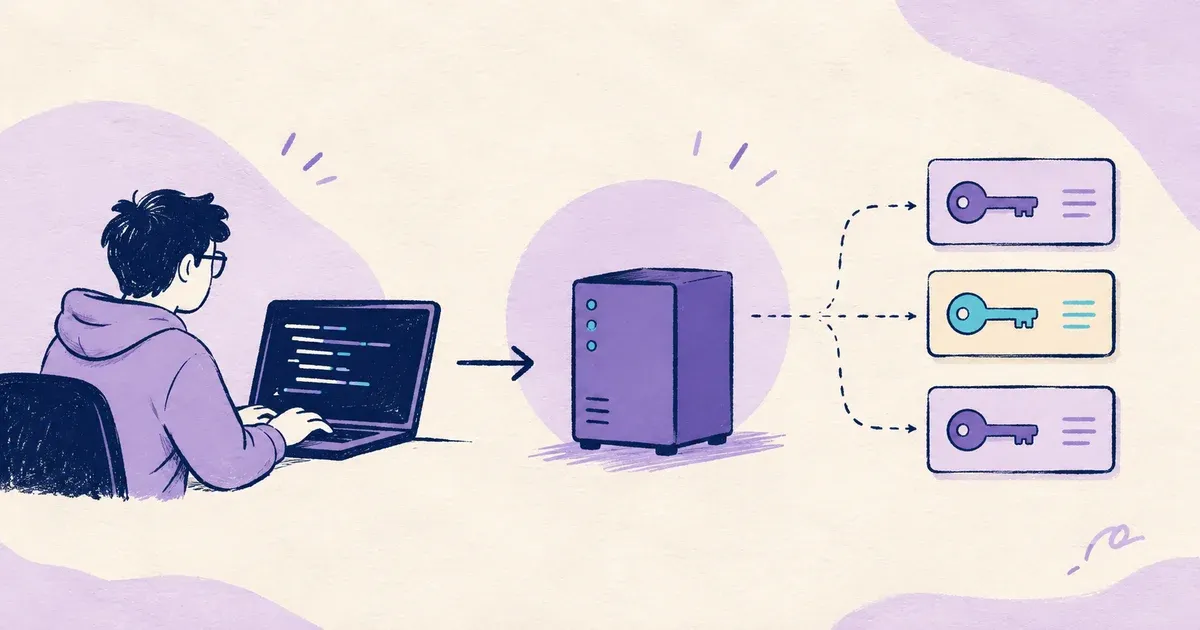
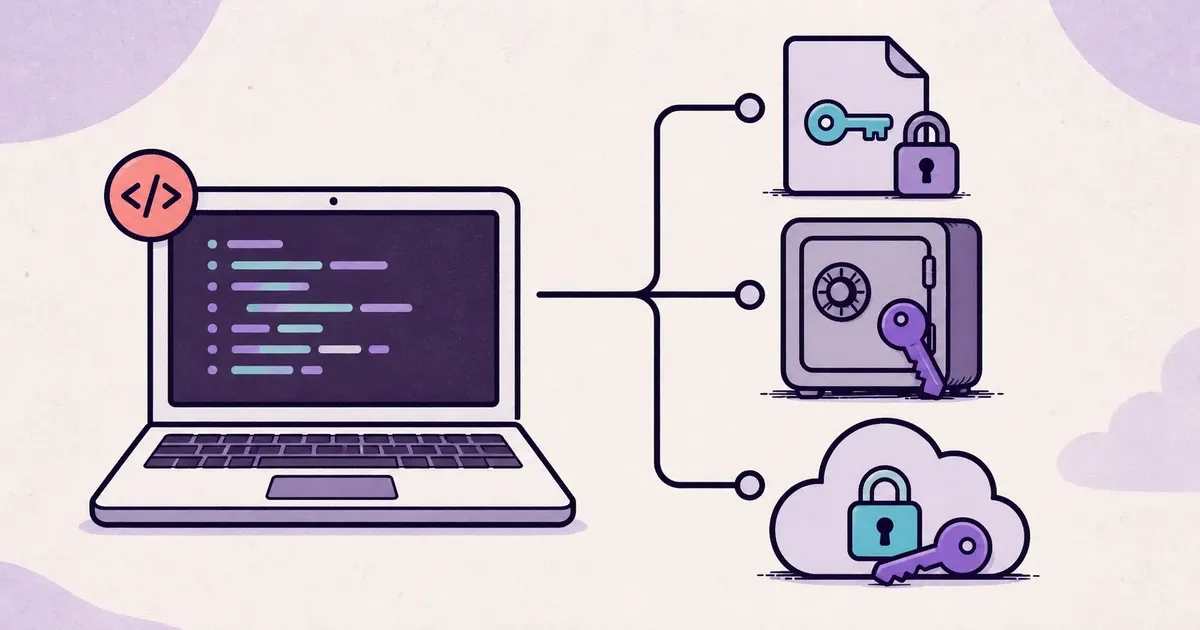
For years, I treated .env files as the obvious place for application secrets. They were simple, familiar, and supported by almost every framework I used.
That approach worked while each project lived on one machine. It became harder when development, staging, CI, and production each needed different values.
I started researching a better way to manage those secrets without losing the workflow I already understood. That search led me to Dopbase.
Dopbase changed how I think about .env. The format is still useful for importing configuration, but it does not need to remain the permanent source of truth.
Along the way, I also found Doppler. Both products can organize secrets and inject them into a process, but they make very different tradeoffs.
For my workflow, Dopbase is the better open-source alternative to Doppler. It gives me a focused model, self-hosted control, and no per-seat license fee.
That recommendation has limits. Doppler remains a stronger fit when a team wants managed infrastructure, broad integrations, enterprise controls, and vendor support.
Why I put Dopbase first
Dopbase focuses on three concepts: projects, environments, and secrets. I did not need to learn a wider infrastructure platform before moving values out of local files.
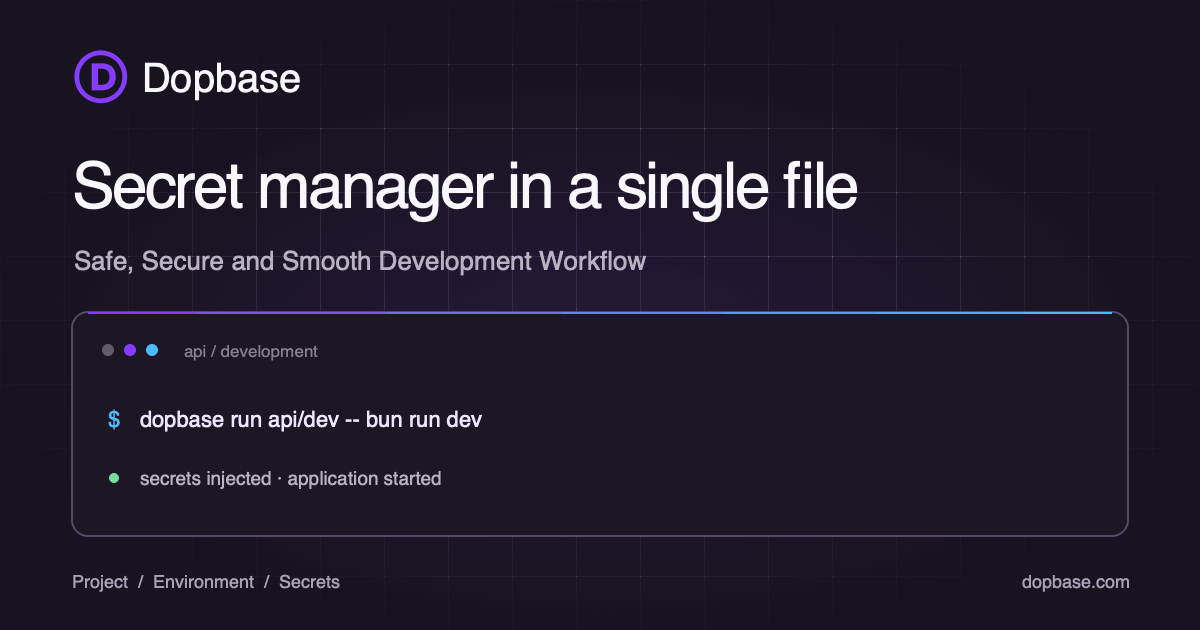
The current Dopbase 0.1.0 release packages its Rust server, command-line client, embedded Admin UI, REST API, migrations, and SQLite storage into one executable.
Its workflow still feels close to normal application development:
dopbase server start
dopbase init payment-service development --from .env
dopbase run payment-service/development -- bun run dev
The first import moves existing values into individually managed secret records. The final command retrieves one environment and injects its values into the child process.
The application still reads environment variables. The important difference is that another working .env file does not need to remain beside the source code.
Dopbase encrypts secret values before storing them in SQLite. Its master key remains separate from the database, and environment-scoped runner tokens limit workload access.
Version 0.1.0 also includes audit records, encrypted backups, and four account roles. Its AI agent identity can inspect metadata without receiving secret values.
I like this narrower boundary. The article on why Dopbase keeps its secrets model small explains the reasoning behind that choice.
Dopbase vs Doppler
The two products overlap at the developer workflow, but their ownership and operating models differ.
| Area | Dopbase | Doppler |
|---|---|---|
| Source | Server, CLI, Admin UI, migrations, tests, and documentation are public under Apache 2.0 | The CLI is public under Apache 2.0, while the platform is sold as a commercial service |
| Deployment | Self-hosted as one executable with SQLite | Managed cloud service, with on-premises deployment on the Enterprise plan |
| Pricing | No per-seat license fee, but you fund and operate the infrastructure | Developer includes three users, then costs $8 per extra user; Team costs $21 per user |
| Model | Projects, environments, and secrets | Projects, environments, root configs, and branch configs |
| Delivery | dopbase run with human sessions or scoped runner tokens |
doppler run with user credentials or config-scoped service tokens |
| Operations | You manage TLS, keys, backups, monitoring, upgrades, and recovery | Doppler manages the hosted service and offers vendor support on paid plans |
| Best fit | Developers wanting a focused, inspectable self-hosted tool | Teams wanting managed operations, integrations, and enterprise controls |
Both tools solve the same immediate problem: an application needs configuration without committed credentials. The deciding question is who should operate the secrets service.
Why Dopbase worked better for me
What won me over was control. Dopbase runs on infrastructure I choose, so its database, network boundary, master key, and backups remain under my administration.
Cost mattered too. The Apache 2.0 software does not charge for each person who joins a project.
Self-hosting is not free. A team still pays for compute and spends time managing TLS, backups, monitoring, upgrades, access, and incident response.
That tradeoff suited my use case because I wanted a small service I could understand and operate. A single executable with SQLite kept that responsibility contained.
The familiar workflow made the decision easier. Importing .env values, then using dopbase run, did not require changing how the application reads configuration.
This also supports a safer local setup. Working credentials can stay outside the repository and reach only the reviewed process that needs them.
The guides on separating development and production secrets and keeping secrets away from coding agents cover those boundaries in more detail.
Where Doppler earns its price
Doppler removes much of the daily work involved in operating a secrets server. That matters when nobody should own database recovery or encryption-key procedures.
When I checked its pricing in September 2026, the Developer plan included three users. Each additional Developer user cost $8 per month.
The Team plan cost $21 per user each month. It included features such as SAML SSO, role-based access controls, change requests, service accounts, automatic rotation, and longer activity logs.
Those charges can grow with a team, which made Doppler less suitable for my priorities. They may still be reasonable when the managed service replaces meaningful operational work.
Doppler also has a broader integration surface and mature enterprise options. Teams that need custom roles, dynamic secrets, compliance support, or contractual service levels may value that breadth.
When to choose Dopbase
Choose Dopbase when you want open-source self-hosting and can operate the service responsibly. It fits developers who prefer a smaller product model over a broad security platform.
It is also a practical choice when per-seat pricing is the main constraint. You exchange subscription growth for infrastructure and operational ownership.
Start with a non-production environment. Test installation, process injection, access revocation, encrypted backup creation, and recovery before trusting it with important credentials.
Public source makes inspection possible, but it does not replace an independent security review. Production use still requires careful deployment and recovery decisions.
When to choose Doppler
Choose Doppler when your team wants a managed service and does not want to maintain a secrets server. Its hosted model removes several routine operational responsibilities.
Doppler also makes more sense when integrations, config branching, SSO, approval workflows, automatic rotation, and enterprise support are requirements rather than optional extras.
For those teams, the subscription may cost less than building equivalent processes internally. The higher price buys a broader product and transfers operational work to a vendor.
Common questions
Is Dopbase a free alternative to Doppler?
Dopbase has no per-seat license fee under Apache 2.0. You still pay for infrastructure and the work required to operate it safely.
Is Dopbase completely open source?
Yes, Dopbase publishes its server, CLI, Admin UI, migrations, tests, and documentation. The repository uses the Apache License 2.0.
Does Dopbase replace .env files?
Dopbase can replace .env as permanent secret storage, not as a familiar exchange format. It can import files and inject values as environment variables.
Can I use Dopbase in production?
Dopbase 0.1.0 documents production self-hosting, but the operator owns security review, TLS, monitoring, key protection, backups, upgrades, and tested recovery.
Is Dopbase Cloud available?
Dopbase Cloud is not available yet. The planned service will use the same client and product model without requiring teams to operate the server.
Conclusion
For developers who want a focused and inspectable system, Dopbase is my first choice among open-source secrets manager alternatives to Doppler.
It keeps the familiar environment-variable workflow while moving working values into encrypted, access-controlled storage. One executable and SQLite make the system easier to understand.
Doppler is the better choice when managed infrastructure, integrations, enterprise controls, and support save more time than its subscription costs.
My own shift started with a simple idea: .env can remain a useful format without remaining the place where every working secret lives.
Try Dopbase with one development project first. Import an existing .env, run the application through Dopbase, revoke its token, and restore an encrypted backup before expanding further.